Loxone vs Control4 vs Crestron: UK Verdict 2026
If you're researching smart home systems for a UK property, three names come up again and again: Control4, Crestron, and Loxone. All three are professional-grade platforms installed by certified specialists — not the DIY plugs and bulbs you buy on Amazon. They are also genuinely different in philosophy, in what they cost to own over a decade, and in how much freedom you keep afterwards. We have designed, installed, and taken over systems on all three since 2014, so this is a working installer's comparison rather than a spec sheet.
The Short Answer
For a London home, Loxone wins on total cost of ownership, offline reliability, and genuine automation: everything is processed locally on a Miniserver, there are no subscriptions, and firmware updates are free for the life of the system. Control4 is the better fit if your project is driven by high-end AV and you want the widest third-party device support. Crestron is the right answer for very large estates and commercial-grade installations where budget is not the constraint. If you want a home that makes decisions on its own rather than one you operate from an app, Loxone is the system we recommend and install.
The Three Systems at a Glance
| Loxone | Control4 | Crestron | |
|---|---|---|---|
| Typical London install | £8,000 – £40,000 | £15,000 – £60,000 | £30,000 – £100,000+ |
| Ongoing subscription | None — app, remote access and updates free | 4Sight annual fee for full remote access | None mandatory, but dealer contracts common |
| Processing | Fully local (Miniserver) | Local controller + cloud services | Local processor, cloud optional |
| Works offline | Everything local carries on | Core functions; cloud features stop | Core functions carry on |
| Programming | Loxone Config — free, open to any partner | Dealer-driven (Composer) | Dealer-driven, proprietary tools |
| Change installer later | Any certified partner can take over | New dealer often rebuilds parts | Project files usually stay with the dealer |
| Strongest at | Automation, lighting, heating, energy | Whole-home AV and device breadth | Estate-scale bespoke projects |
| Weakest at | Native voice control, retail availability | Genuine autonomous automation | Cost and complexity for normal homes |
Loxone: Local Processing, No Subscriptions
Loxone's core advantage is the Miniserver — a local processor that handles everything on-site with sub-millisecond response times. No cloud dependency, no monthly fees, no latency. If your internet goes down, your home continues working perfectly. Loxone also treats automation as the default rather than as a feature: it watches the weather forecast, tracks sun position, monitors CO2 and temperature, and adjusts your environment before you notice anything is wrong. It's not waiting for you to say "Alexa, turn on the lights" — it's already done it. Our Loxone installation service breaks the full system down room by room, and if you're new to the platform entirely, start with our honest Loxone guide — the weaknesses are in there too. Energy management deserves a special mention: Loxone coordinates solar, battery, EV charging and hot water against your tariff natively, with no extra platform — we cover it in depth on our Energy Autopilot page.
Control4: The Polished Middle Ground
Control4 (now part of Snap One) is one of the most widely installed home automation platforms in the UK and the US, and its real strength is breadth: a polished app, a large dealer network, and drivers for almost every AV brand you can name. The trade-offs are structural. Control4 home automation leans on cloud services, and full remote access and notifications sit behind an annual 4Sight subscription — a running cost for the life of the system. Programming is dealer-driven, so quality varies enormously between installers: the same brief can produce an excellent system or an amateur one depending on who turned up. It is a very good universal control layer for a complicated house. It is a weaker automation engine. (Weighing a switch away from it? Our Control4 alternative page covers the subscription maths and what a takeover keeps.)
Crestron: Enterprise-Grade, Enterprise Price
Crestron is the gold standard in commercial AV and large-scale automation, and Crestron Home has made residential projects far more approachable than the programming-only days. Crestron home automation is immensely powerful and endlessly customisable — but that arrives with cost and complexity. In our experience of UK projects, Crestron installations typically land at two to three times the equivalent Loxone specification. Programming is done in Crestron's own tools, and future changes usually mean going back to the dealer who holds the project files. For a townhouse or a family home it is capable but overkill — our Crestron alternative page sets out where the budget difference goes. For a large estate with a cinema, pool house, and staff flat, it earns its place.
The Ten-Year Cost, Not the Quote
Most people compare installation quotes. That is the wrong number. What matters is what the system costs to own for ten years, because that is roughly how long you will live with it before a major refresh. Our Loxone projects run £8,000-£15,000 for a flat or a starter system, £15,000-£40,000 for a typical London family home, and £40,000+ for whole-house automation — and then £0 a month afterwards, with firmware updates that add real features included. On subscription platforms you add an annual fee per system for remote access, and on any dealer-programmed system you add a call-out and programming charge every time you want a scene changed, a room added, or a device swapped. Over ten years those small recurring items routinely add up to more than the difference in the original quote. Our smart home cost calculator gives you a realistic range for your own property in about a minute, and our full cost guide shows where the money actually goes.
Who Actually Owns Your Home
This is the question nobody asks until they need the answer. If you fall out with your installer, or your installer closes, can somebody else take the system over? With Loxone, the programming lives in Loxone Config, the software is free to download, and the configuration sits on the Miniserver in your house — any certified Loxone partner can open it and carry on. We have adopted plenty of orphaned Loxone systems for exactly that reason. On dealer-programmed platforms the project files often live with the original dealer, and a new dealer may need to rebuild parts of the configuration from scratch. That is a real cost and a real dependency, and it is worth asking any integrator — including us — to put their answer in writing before you sign.
What Happens When the Internet Drops
Ask for a demonstration of this rather than a promise. On a Loxone system, pull the internet out and everything local carries on: lights, scenes, heating, blinds, presence logic, alarm response, wall panels, and the app while you are on your own WiFi. You lose remote access and weather forecasting, and nothing else. Cloud-dependent platforms degrade in ways that are harder to predict — voice control, push notifications, and remote access typically stop, and depending on how the system was designed, some scenes and integrations stop with them. In a London flat with a temperamental broadband riser, that is not a hypothetical.
Retrofit or New Build
If your walls are open, Loxone Tree is the cleanest answer: one bus cable daisy-chains switches, sensors, and dimmers and uses 40-60% less cable than conventional wiring — the full cable list is in our smart home wiring guide for London new builds. If your house is finished and you are not about to replaster, Loxone Air modules fit behind existing switch plates and deliver the same automation wirelessly — including full lighting control of DALI, DMX, 0-10V and dumb circuits alike. This is where AV-led platforms get expensive quickly, because they were designed around structured wiring and equipment racks. Retrofit is the most common London scenario, and it is the situation that separates the three systems most sharply on price.
What Changed in 2026
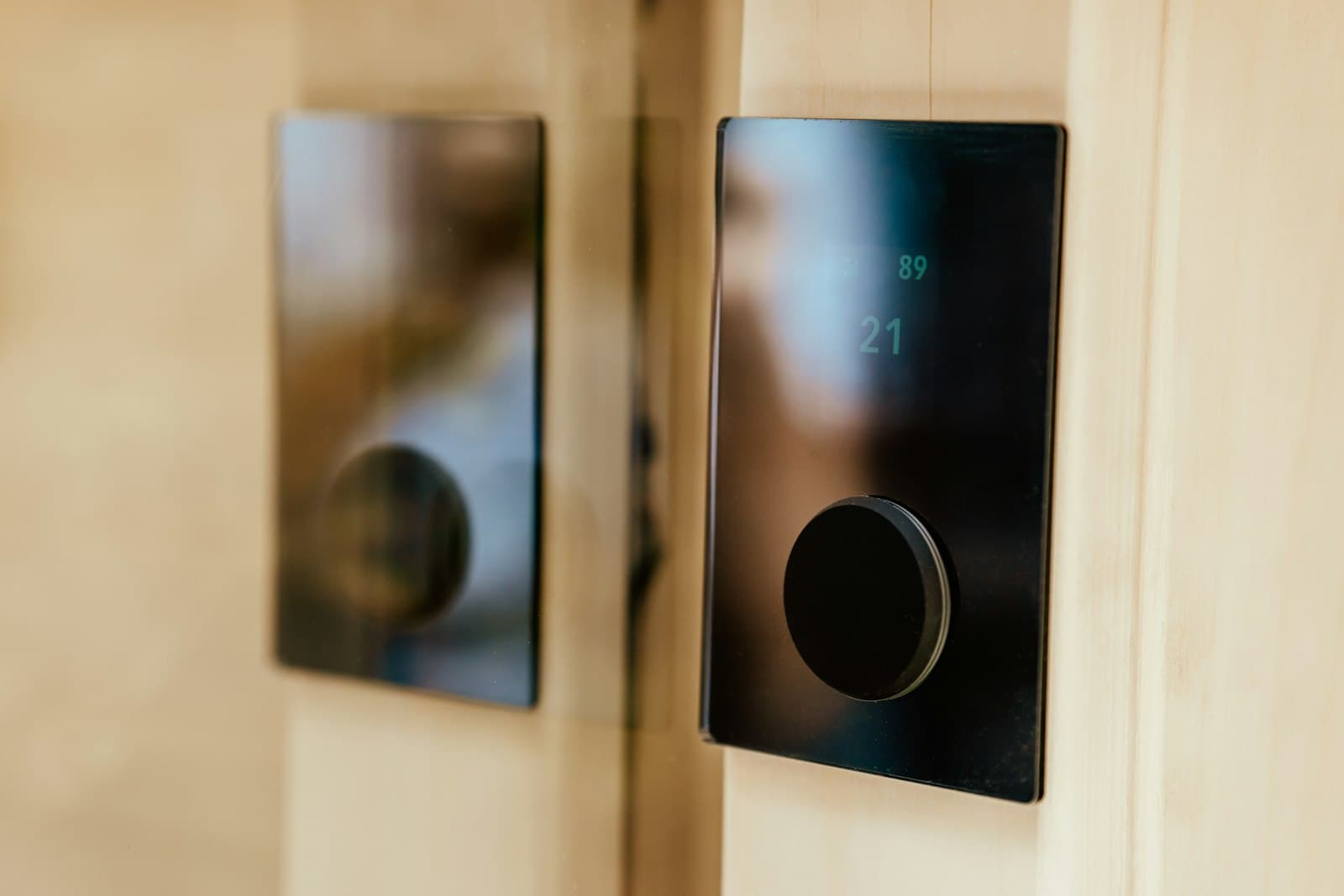
Two things are worth knowing if you are comparing this year. Loxone released the Touch Pure Display in July 2026 — a full-display room controller that joins the same Miniserver and the same app with no new hub and no new subscription, which is a fair illustration of how the ecosystem evolves; we covered it in our Touch Pure Display first look. Meanwhile the AV-led platforms have continued consolidating under larger corporate owners, which matters mainly for what happens to dealer support and licensing across a ten-year ownership window. Ask any integrator how their platform handled the last five years of updates, not what it promises for the next five.
Which One Is Right for You
Choose Loxone if you want automation that runs itself, local processing, no subscriptions, and the freedom to change installer later — and if lighting, climate, shading, and energy matter more to you than a fifteen-source AV matrix. (Our features catalogue shows what that looks like in daily life, priced per feature rather than per device.) Choose Control4 if your project is fundamentally an AV project with automation attached and you value the breadth of the driver library above running costs. Choose Crestron if you are building at estate scale, want fully bespoke control interfaces, and neither the budget nor an ongoing dealer relationship is a constraint. There is no shame in any of the three. The mistake is buying a system whose philosophy does not match how you actually want to live.
The Bottom Line
If you want a system that's genuinely intelligent (not just remote-controlled), works without internet, costs nothing to run after installation, and gets better with free updates — Loxone is the clear winner for London residential properties. See our Loxone smart home installation service for the full system breakdown, our smart home installation in London guide for how a project runs from survey to handover, our Station House project for how it looks in a finished house, or book a consultation and we'll show you a working Loxone system in person — including the internet-off test.
Questions we get asked
Is Control4 worth it?
If your project is fundamentally an AV project — multiple video sources, distributed audio, a cinema — Control4 is a genuinely good universal control layer, and worth it on those terms. Factor in the full picture though: the annual 4Sight subscription for remote access, dealer call-out charges for every programming change, and the fact that your project files typically stay with the dealer. If your priority is automation of lighting, heating and security rather than AV, the same budget goes further on Loxone.
What are the alternatives to Control4?
The main professional alternatives in the UK are Loxone (locally processed, no subscriptions, automation-first), Crestron (estate-scale, fully bespoke, at a much higher price), KNX (an open standard popular with architects on larger projects) and Savant (AV-led, Apple-flavoured, mostly US). For technical DIYers, Home Assistant is free and impressive but is a hobby, not a product. Which one fits depends on whether your project is led by AV or by automation — our honest Loxone guide covers that decision in detail.
Which is cheapest: Loxone, Control4 or Crestron?
Loxone, in our experience — both on installation day and across ten years. A typical London family home runs £15,000-£40,000 on Loxone with zero monthly costs afterwards. An equivalent Control4 project usually quotes higher and adds the 4Sight annual fee, and Crestron typically lands at two to three times the Loxone figure. Cheapest is not really the argument, though — Loxone also automates better, which is why we standardised on it.
Is Crestron worth the money for a normal home?
For a townhouse or family home, honestly, rarely — it is capable but overkill, and the budget difference buys a lot elsewhere in the project. Crestron earns its place at estate scale: multiple buildings, bespoke control interfaces, commercial-grade AV, and a client for whom the dealer relationship is a feature rather than a dependency.
Can I switch from Control4 or Crestron to Loxone?
Yes — we have done full takeovers and phased migrations. Speakers, screens, and most wiring are reusable; the control layer and programming are what change. The reverse question is worth asking too: with Loxone, the configuration lives on the Miniserver in your house and any certified partner can take it over, so you are never locked to one company — including us.
Are Control4 and Crestron available in the UK?
Yes, both have established UK dealer networks, mostly focused on AV-led projects, and Crestron has a strong UK commercial presence. Loxone also has a UK operation and partner network — we have been a certified partner since 2014, with over 200 installations across London and the Home Counties.
Can I keep my Sonos, Hue or Nest?
Usually yes — all three platforms integrate them, and we do it where the kit earns its place. When specifying from scratch we normally propose Loxone equivalents instead, so the whole system updates and is supported as one, rather than five ecosystems ageing at different speeds.
Does the choice of system affect resale value?
A documented, locally-processed system with no subscription attached is an asset a buyer's surveyor can understand. An undocumented system that only one dealer can maintain is a liability — we have seen it raised in conveyancing. Whatever platform you choose, insist on documentation and ask who else could take the system over.
Ready to get started?
Free consultation. No obligation.