Smart Home Heating · Room by Room · Weather-Aware
Heat the rooms you live in.Stop paying for the rest.
One thermostat in the hallway is a guess about the whole house. Smart home heating control measures every room, heats each one to its own schedule, and reads tomorrow's forecast before deciding what to do tonight.
Boilers, radiators, underfloor, heat pumps and hot water — one local brain, no subscription. Up to 51% less heating energy in Loxone's published trials.
Heating · room by room
Forecast: sunny pm — south rooms will self-heat
Boiler fires only on real demand
£0/month · runs locally
Seven rooms, seven schedules — one system deciding together
The Problem
Five ways a single thermostat fails your house.
Nothing is wrong with your boiler. The problem is that one sensor in a hallway — the room nobody sits in — is making the heating decisions for every room you actually live in.
It measures one room and guesses the rest
The hallway thermostat holds the hallway at 21° — while the south-facing lounge overheats and the north bedroom never warms up. Every other room in the house is collateral.
It heats rooms nobody is in
The guest room gets the same heat as the kitchen, every day, all winter. In a typical four-bed house, two or three rooms are barely used — and fully heated.
It reacts instead of anticipating
A thermostat waits until the room is cold, then fires the boiler. Underfloor heating can take two hours to respond — by which time the sun is out and the room overshoots.
It ignores free heat entirely
On a clear February day, a south-facing room heats itself through the glass. A single thermostat in the hallway has no idea — so the radiators run anyway.
It heats the open window
Someone airs the bathroom; the thermostat feels the chill and works harder. Room sensors spot the temperature drop signature and pause that room, not the house.
A sensor in every room
Measure where people live, control what each room does, and let one brain coordinate the boiler, the blinds and the forecast. That is the whole idea — everything below is how.
Anticipation, Not Reaction
The heating reads tomorrow's weather tonight.
A thermostat reacts: the room is cold, so it fires the boiler. Room-by-room Loxone control anticipates: the forecast says sun on the south elevation from 2pm, so those rooms skip their afternoon heating and take the free solar gain through the glass — with the blinds coordinated to let it in during winter and block it in July.
The same forward planning is what makes slow systems work. Underfloor heating that takes two hours to respond is started two hours early and stopped two hours before it would overshoot. You never think about any of this — the rooms are simply the right temperature when you walk in.
Solar gain used before the boiler runs
Open windows pause the room, not the house
Setback overnight, warm for the alarm clock
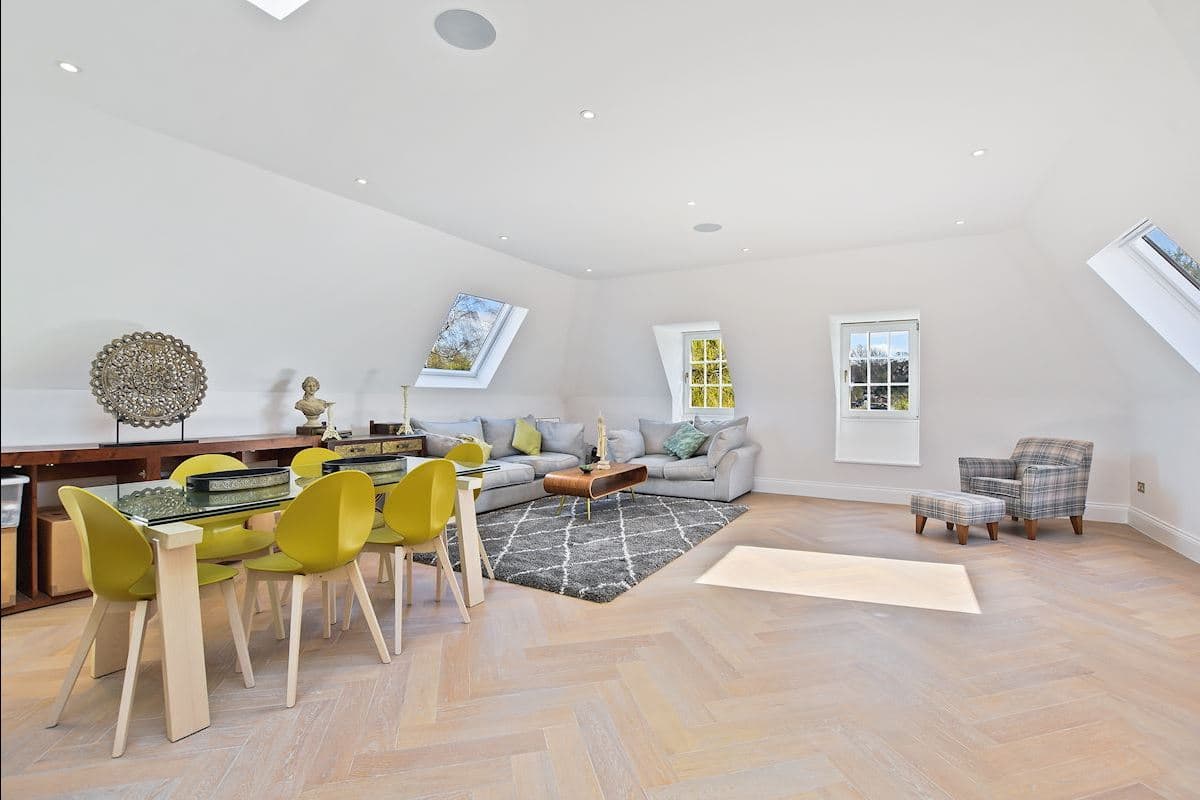 Sheldon Avenue, London
What We Control
Whatever heats your house, one brain runs it.
Most London houses are mixtures — a boiler and radiators upstairs, underfloor in the kitchen extension, an electric floor in the bathroom, maybe a heat pump on the horizon. The point of doing this under Loxone is that the mixture behaves as one system, in one app, with one logic.
Boiler + radiators
Most London homes, retrofit-friendly
Wireless valve actuators replace your radiator TRVs, a relay or OpenTherm interface drives the boiler, and every room becomes its own zone — with the boiler only firing when a room genuinely calls for heat.
Wet underfloor heating
Extensions, renovations and new builds
We control the manifold actuators per loop, with room sensors doing the measuring. Because UFH is slow, the forecast matters most here: the system starts and stops hours ahead so the slab is right when you are.
Electric underfloor heating
Bathrooms and single-room retrofits
Timed floors that toast an empty bathroom at 3pm are the norm. Ours run on occupancy patterns and the room schedule, with a floor sensor for limits.
Heat pumps
New builds and the gas-free future
Heat pumps live or die by running low and slow. Room-by-room control with weather compensation keeps flow temperatures down, which is precisely where heat pump efficiency comes from.
Hot water & cylinders
Every house with a tank
Heated on schedule and boosted on demand, with legionella cycles handled automatically. With solar PV, surplus generation heats water before it exports to the grid.
Cooling & air conditioning
Lofts, glass extensions, bedrooms
The same room logic runs cooling — and, more importantly, coordinates blinds first. Shading a room is free; cooling it is not. The system uses them in that order.
Running a commercial building rather than a home? The same engineering at building scale lives on our commercial heating, cooling & ventilation page.
The Money Question
“Will it actually cut the bill?”
Loxone's own Energy House trials documented up to 51% less energy on heating and cooling, and on large London houses previously run from one thermostat we see savings of that order. The savings are not magic — they come from four mundane mechanisms: rooms nobody uses drop to setback instead of full temperature, schedules match how you actually live, free solar gain is used before the boiler is, and the whole house stops heating the moment it empties.
The honest part: the size of the saving depends on the size of the waste. A rambling Victorian house with two spare bedrooms and a formal dining room saves dramatically. A well-insulated two-bed flat where every room is used daily saves less — worth having, but not 40%. We will tell you which kind of house you have at the survey, because a system sold on savings it cannot deliver ends up on the wall of shame, and we would rather lose the job.
Heating is one half of the energy story — the other half is solar, battery and EV charging, which our Energy Autopilot page covers. New to the platform behind both? Start with the honest Loxone guide, or see what a whole automated home does in what is a smart home?
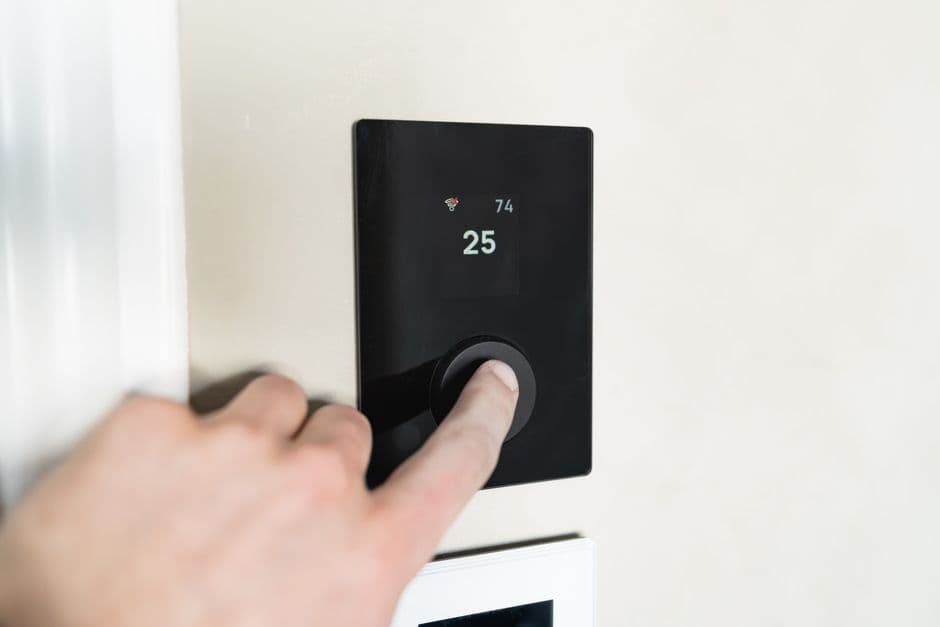
The Retrofit Question
“Do I have to replumb the house?”
No. For a typical radiator house the conversion is wireless: valve actuators screw onto your existing radiators in place of the TRV heads, a sensor goes in each room, and the boiler gains one interface. No pipework touched, one to two days on site, and the house is zoned.
Renovating anyway? Then the advice is the same as for lighting: while the walls are open, wire it. Wired sensors, manifold control for new underfloor circuits, and a proper cylinder strategy cost little during a build and everything after one.
Either way it starts with the same free survey — we look at the boiler, the radiators, the manifolds and how you use the rooms, then quote it itemised so you can see what each zone costs.
Questions, Answered
Smart heating FAQs
What is smart home heating control?+
Instead of one thermostat deciding for the whole house, every room gets its own temperature sensor and its own control over its radiators or underfloor loop — coordinated by a central controller, in our installations the Loxone Miniserver. Each room follows its own schedule and occupancy, the boiler or heat pump only runs when a room genuinely calls for heat, and the weather forecast is used to anticipate rather than react. It runs locally in your house with no subscription.
Will it work with my existing boiler and radiators?+
Almost certainly. For most London retrofits we replace the thermostatic valve heads on your radiators with wireless Loxone actuators — no plumbing, about ten minutes per radiator — add a room sensor per zone, and interface with the boiler via a simple relay or OpenTherm where the boiler supports it. Your boiler, pipework and radiators all stay. A typical house is converted in one to two days.
How is this different from a Nest, Hive or tado thermostat?+
A smart thermostat is still mostly one thermostat — a better-looking version of the hallway dial, with an app. Some add radiator valves, but the logic stays shallow and lives in the manufacturer’s cloud. Room-by-room control under Loxone measures and controls every room independently, coordinates blinds and windows, uses the weather forecast to pre-empt rather than chase, and runs entirely locally — no subscription, and it keeps working if the company’s servers or your internet go down. It costs more than a £200 thermostat, and it does proportionally more.
How much can zoned heating actually save?+
Loxone’s own Energy House trials documented up to 51% less energy on heating and cooling, and on large London houses previously run from one hall thermostat we see savings of that order. The honest caveats: the biggest savings come from larger houses with rooms that sit empty — spare bedrooms, formal dining rooms, guest suites. A well-insulated two-bed flat where every room is used daily will save meaningfully less. We will tell you which kind of house you have at the survey, before you spend anything.
Does it control underfloor heating and heat pumps?+
Yes — both are where room-by-room control earns its keep most. For wet underfloor heating we drive the manifold actuators per loop and lean heavily on the weather forecast, because a slab that takes two hours to warm needs decisions made two hours early. For heat pumps, zoning plus weather compensation keeps flow temperatures low, which is the entire trick to heat pump efficiency. Mixed systems — UFH downstairs, radiators upstairs, a towel rail in every bathroom — are our normal, not an exception.
Does smart heating need the internet to work?+
No. All the logic runs on the Miniserver inside your house — schedules, sensors, boiler control and frost protection keep working with the broadband down. The internet is only used for control from outside the house and for the weather forecast; if it drops, the system falls back to sensor-led control until it returns.
Can I start with just heating and add more later?+
Yes, and heating is one of the best entry points into a smart home because it pays for itself. The Miniserver that zones your heating is the same brain that later runs lighting, blinds, security and audio — nothing is thrown away when you extend. Plenty of our whole-house clients started with exactly this page’s system and added rooms and functions over the following years.
Tell us how your house is heated.
Boiler, underfloor, heat pump or all three — fifteen minutes on the phone and we'll tell you what zoning it would involve, what it would save, and what it costs. Then a free survey if it stacks up.